Hip Pain & the Pelvic Floor: What Your Hip Pain Could Be Telling You About Your Pelvic Floor
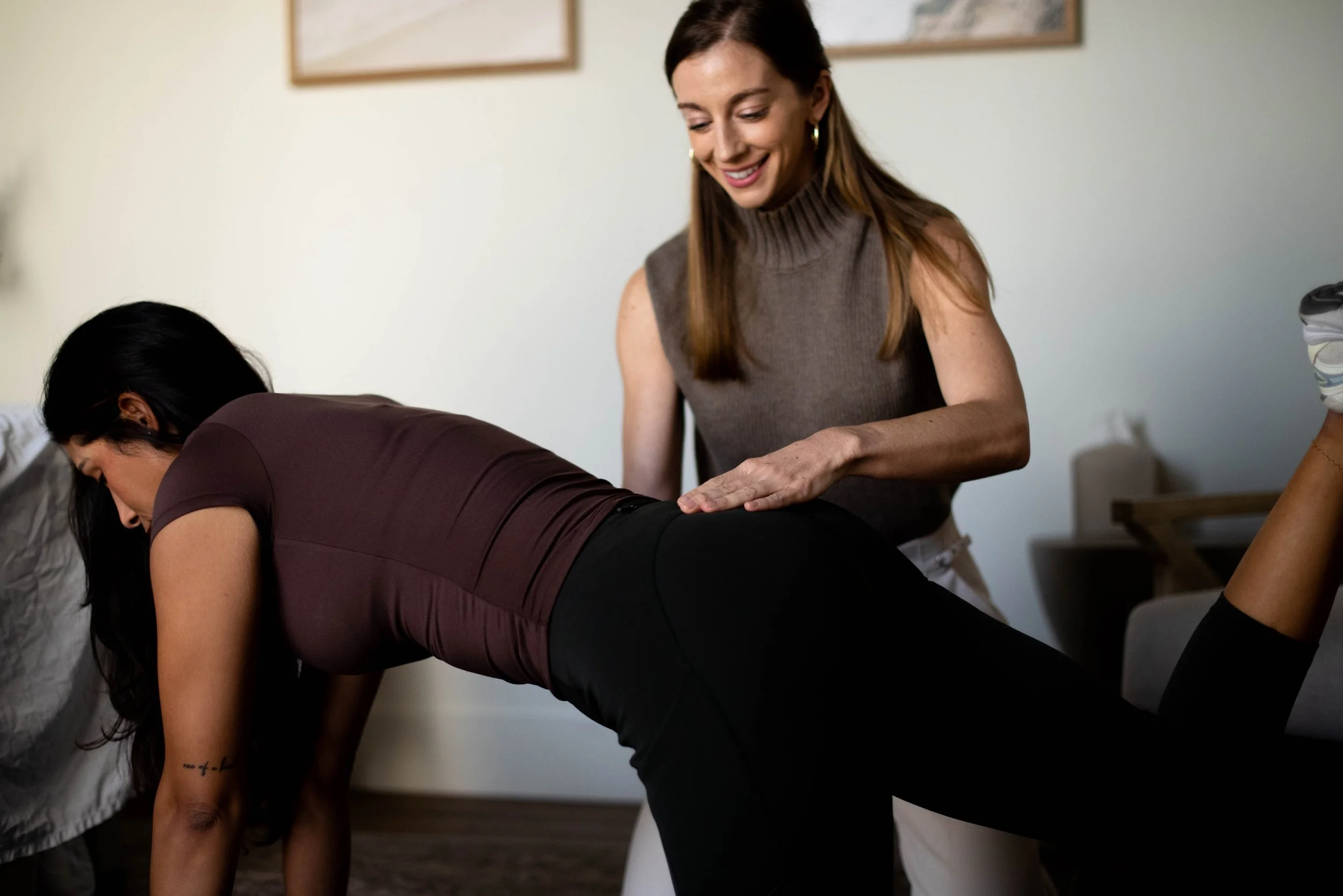
Mobility, Stability, and the Compensations In Between
Hip pain and pelvic floor dysfunction often show up together, but not by coincidence.
If you’ve been dealing with stubborn hip tightness, deep glute pain, or even labral issues, there’s a good chance your pelvic floor is part of the story. And if you’re navigating pelvic floor symptoms (leakage, heaviness, pain, or instability), your hips are almost always involved.
Let’s break down why.
The Hip–Pelvic Floor Connection
Your hips and pelvic floor are not separate systems—they’re part of a shared support network.
The pelvic floor attaches to the pelvis, while key hip muscles (like the glutes, hip deep rotators, and adductors) influence how that pelvis moves and stabilizes. Together, they help manage:
Load transfer through the pelvis
Stability during walking, running, and lifting
Pressure regulation (core + pelvic floor coordination)
Alignment of the spine and lower body
When one area isn’t doing its job well, the other system has to compensate.
Mobility vs. Stability: Finding the Balance
A common mistake is assuming hip pain is always a mobility problem.
Sometimes it is—but often it’s the opposite.
1. When Mobility Is Limited
If your hips lack range of motion (especially internal rotation or extension), your body still needs to get movement from somewhere.
So it borrows from the low back, the pelvis, and the pelvic floor.
This can lead to overactive or tense pelvic floor muscles, pain with sitting or deep hip flexion, and difficulty relaxing during bowel movementsor intimacy.
In this case, the pelvic floor isn’t weak, it’s working overtime.
2. When Stability Is Lacking
On the flip side, if your hips are too mobile or lack strength (especially in the glutes and even down into the foot!), the pelvis becomes less supported.
That instability creates:
Increased load on the pelvic floor
Poor force transfer during movement
Compensatory gripping or bracing patterns
This can contribute to urinary leakage (especially with impact), feelings of heaviness or prolapse symptoms, core weakness or poor coordination, and groin or pelvic pain.
Here, the pelvic floor is trying to “pick up the slack” for underperforming hip stabilizers.
Common Compensation Patterns
Your body is incredibly good at adapting, but those adaptations can create new problems.
Here are a few patterns we often see:
Glutes underworking → pelvic floor overworking
Weak or delayed glute activation shifts stability demands to the pelvic floor.
Limited hip rotation → pelvic floor tension
If the hip can’t rotate well, the pelvic floor may tighten to help control movement.
Over-reliance on adductors
Inner thigh muscles can become dominant, pulling on the pelvic floor and increasing tension.
Abdominal gripping instead of coordination
Instead of a balanced system (diaphragm + core + pelvic floor), the body defaults to gripping.
Why This Matters for Pain (and Performance)
Research continues to show that hip muscle function, especially the gluteus medius and deep hip rotators plays a role in both pelvic stability and pelvic floor function.
When the system is out of balance:
Movement becomes less efficient
Load isn’t distributed well
Sensitive tissues (like the pelvic floor) become overloaded
This is why treating hip pain in isolation—or pelvic floor symptoms in isolation—often doesn’t fully resolve the issue.
What Actually Helps
The goal isn’t just “stronger hips” or “relaxed pelvic floor.”
It’s better coordination between the two.
1. Restore Hip Mobility (Where Needed)
Focus on:
Hip extension
Gentle, controlled range—not forcing flexibility
2. Build True Hip Stability
Especially:
Glute medius (side hip)
Deep rotators (not just big glute max work)
Single-leg control
Re-training foot mechanics and loading
3. Retrain the Pelvic Floor
Depending on the presentation:
Downtraining (if overactive/tight)
Strength + timing (if underactive)
Breath coordination
4. Integrate the System
This is where things stick.
Think:
Breathing + movement
Core + hip + pelvic floor working together
Functional patterns (walking, squatting, lifting)
The Takeaway
Hip pain and pelvic floor dysfunction are rarely isolated issues.
They’re part of a larger conversation about how your body manages:
Mobility
Stability
Load
If one piece is off, the whole system adapts—and those adaptations can show up as pain, tension, or dysfunction elsewhere.
Addressing both the hips and pelvic floor—together—is what leads to lasting change.
For an overview of pelvic anatomy, introduction to our services, and conversation about your symptoms, book a free discovery call today!
Medical Disclaimer:
This blog is for educational purposes only and is not intended to replace medical advice, diagnosis, or treatment. Every body and situation is different—if you have specific concerns, symptoms, or questions, we recommend working with a licensed healthcare provider or pelvic health specialist.