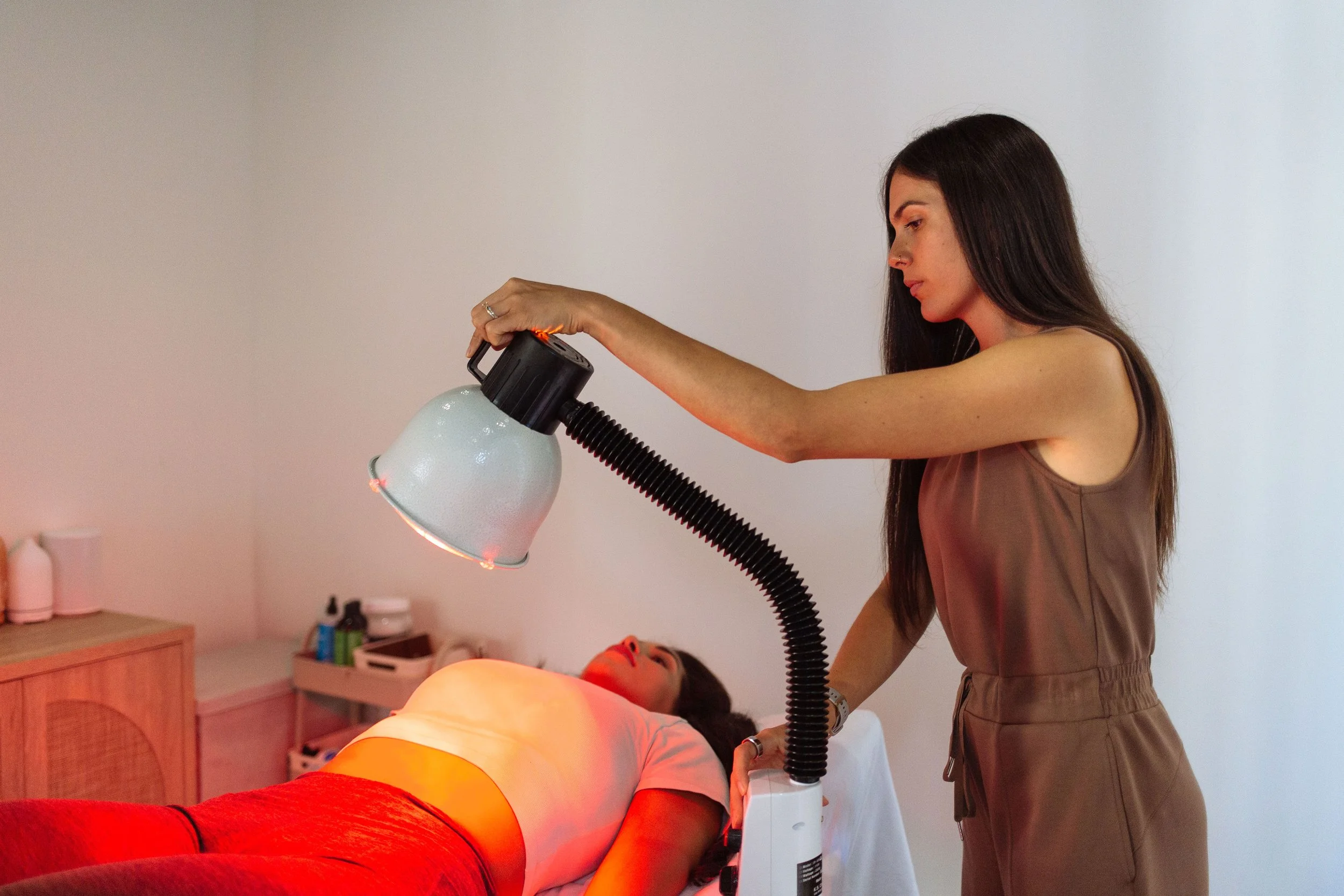
Dr. Mallorie Hopkins, PT, DPT, Endometriosis Specialist
Painful periods? GI issues? Fertility challenges, or UTI symptoms?
All of these symptoms — especially when there are no clear answers — can feel confusing and frustrating.
Simply put, endometriosis is an inflammatory condition where tissue similar to the uterine lining grows outside of the uterus. The tissue that implants on the organs, called lesions, can appear throughout the abdominopelvic cavity, and sometimes even beyond.
Over time, these lesions can cause scarring and “adhesions,” which are best understood as areas where tissues or organs stick together. Imagine scar tissue that is thick or hard to the touch, as from a knee surgery. You can think of adhesions in a similar way. Adhesions are essentially internal scar tissue that thickens where space between the organs should exist.
Endometriosis is classified into 4 stages, but here’s the important part: the stage doesn’t always match the level of pain. Some people with stage 1 endo experience severe pain, while others with stage 4 may have minimal discomfort. Pain is subjective, and we meet you exactly where you are.
So how do you know if you have endometriosis? Let’s break it down.
endo symptoms
TW: Ectopic Pregnancies, Ruptured Cysts, and Unexplained Infertility are discussed in this section. Feel free to continue scrolling to the “seeking care” section to learn about surgery, pelvic floor therapy, and other support options.
Many people first associate endometriosis with painful periods, especially when the pain has caused missed school or work. (P.S. Missed school or work is a hallmark sign of endometriosis – and it is not your fault). But it can also show up in less obvious ways, and these often-overlooked symptoms are frequently dismissed or overlooked by medical providers.
Let’s explore other symptoms that could be related to endometriosis.
Digestion
Digestive symptoms are surprisingly common in people with endometriosis. Many people undergo colonoscopies, biopsies, or other GI investigations because they experience vomiting, sharp abdominal or gas pains, constipation, anal spasms, or loose stools during their period. After all that testing, it’s common to hear, “Everything looks normal.”
But how can it be normal when you’re in debilitating pain?
Hear this clearly:
Debilitating pain is not normal. We want you to know why you aren’t getting test results that reflect that.
Colonoscopies examine the inside of your colon,not the outside – but endometriosis lesions and adhesions can occur on the outside of your organs and create blockages, making it painful for stool to pass. So yes, maybe the inside of your colon does look normal. But if you’re still experiencing GI pain without answers, it may be endometriosis.
Bladder
Bladder symptoms are another clue. Frequent UTIs that always come back negative, or burning over your bladder, often get labeled as interstitial cystitis—and maybe that’s accurate. But if you don’t have Hunner’s lesions, what else could be causing your tissue pain? Often, endometriosis can be on the bladder itself, or the bladder can be stuck to the uterus, causing burning or pain with bladder filling. If you’ve done all the typical testing and still can’t find relief, endometriosis might be in play.
Ruptured Cysts
Frequent cyst ruptures? Let’s find out if they’re endometriomas.
Endometriomas, also known as chocolate cysts, are often related to ovulation. When we ovulate, an endometrioma can develop. In some cases, it may even prevent ovulation from occurring. The difference between a typical ovarian cyst and an endometrioma becomes clear if it ruptures. After an endometrioma rupture, blood fills the pelvic cavity – not just fluid – which is why it’s called a chocolate cyst.
Next time someone tells you that you have a cyst – ER doc, Gynecologist – ask whether it’s an endometrioma. You can also consider getting a second opinion from a specialist.
Ectopic Pregnancies
Ectopic pregnancies are one of the most common experiences we see as pelvic health therapists. An ectopic pregnancy can lead us to consider an endometriosis diagnosis. We highly encourage you to seek evaluation if you’ve had an ectopic pregnancy—especially if your tube was “saved” and not removed.
We say this gently: the last thing we want is for you to have another ectopic. Endometriosis can scar, pin, and even wrap around the fallopian tube, making it difficult for a fertilized egg to pass. If you’ve had an ectopic pregnancy, a second opinion can be lifesaving.
“Silent” Endometriosis
Silent endometriosis isn’t connected to pain but is often linked to infertility. Many times, a patient will have been trying for years, and they come to us for pelvic health support, pelvic floor therapy, or mercier therapy. Often, we collaborate with an endo surgeon to get a second opinion and check for adhesions preventing pregnancy. When surgery is performed and combined with pelvic floor physical therapy, we almost always see pregnancies occur.
So if you’ve been experiencing infertility – especially “unexplained infertility” – and have yet to seek care for endo, this is your sign. As Holistic Pelvic Floor Therapists, we are here to support you and guide you toward answers.
Seeking Care for Endometriosis — What’s Next?
Now that we’ve talked about symptoms, let’s discuss how to actually seek care and get the answers you deserve.
The Gold Standard: Surgery
First things first: currently, the only definitive way to diagnose and treat endometriosis is surgery.

Dr. Mallorie Hopkins, PT, DPT
Endometriosis Care Specialist; Certified Under iCareBetter
Specifically, laparoscopic excision surgery performed by a specialist. These surgeons are usually gynecologists and can be MDs, DOs, or NaPro doctors. While surgery is the gold standard, we still like to recommend a proactive, supportive approach.
In our opinion, the best step to take before surgery is visiting a pelvic floor physical therapist who specializes in endometriosis.
As Pelvic PTs who hold this specialty, we have seen firsthand the positive impact manual therapy has had on patients before and after excision. Pelvic Floor Therapy visits allow you to get a proper screen, begin support right away, and start a series of “prehab” appointments that can improve recovery if surgery becomes necessary. The right pelvic floor therapist will do all of this with a nervous-system aware approach, ensuring your body and mind are not only prepared, but supported by a qualified, caring provider (who will be there for you before and after surgery).
Finding the Right Surgeon
Pelvic Floor PTs with an endo specialty should keep a trusted network of excision specialists. Their referral should ensure you’re in the right hands. Some of our most recommended are Dr. Behbehani, Dr. Kotob, and Dr. Stuparich.
If you don’t have a referral, or if you want to explore surgeons before seeing a PT, Nancy’s Nook on Facebook is a great resource. They maintain a patient-reviewed list of excision surgeons by state. You can find someone local or someone you connect with, even if that means traveling, since many patients fly for this surgery.
Non-Surgical Options
As of now, surgery remains the gold standard for removing endometriosis, though we’re hopeful that more options will become available. There are some promising developments, like MRIs with dynamic ultrasounds, period blood testing, and other emerging tools for diagnosing without surgery. But the reality is that once endometriosis is identified, the only way to fully remove it is still through surgery. Many of our patients choose the surgical route. We guide them, from preparation to recovery, to make the process as smooth as possible. Other patients may not choose the surgical route. In this case, we focus instead on pelvic floor therapy, bodywork, coaching, and other strategies to manage symptoms and improve quality of life.
Both approaches, surgical and non-surgical, are valid and highly dependent on individual needs. We’re here to support you no matter what route you take.
How We Support You at Tonic & Phasic
Whether you are struggling with pain, navigating a diagnosis, preparing for surgery, or recovering afterward, we are here to guide you. Both Dr. Allea and Dr. Mallorie have attended excision surgeries with patients, which informs our therapy and helps optimize recovery outcomes.
Our approach integrates:
Holistic pelvic floor physical therapy to release tension, improve mobility, and reduce pain
Hormone coaching and cycle tracking to understand patterns and support balance
Nutrition and herbal guidance to manage inflammation and symptoms
Collaboration with excision surgeons
Blogpost: Love, Intimacy, and When Sex Hurts
Moving Forward
Endometriosis can feel isolating, but you are not alone. Understanding your symptoms, seeking evaluation, and receiving supportive care can transform your experience. Whether you are just starting to look for answers or recovering from surgery, we are here to guide you, educate you, and stand with you throughout your journey.
Your pain is valid, your questions are valid, and your path, whatever you choose, is valid.
We are available M-F to answer questions you may have about endometriosis care: feel free to send us an email at info@tonicandphasic.com or call us at (949) 612-7695.
You can also book a free 15-minute consultation to see if Pelvic Floor Physical Therapy for Endometriosis is for you. Click here to book.