Understanding Male Pelvic Health and the Role of the Pelvic Floor
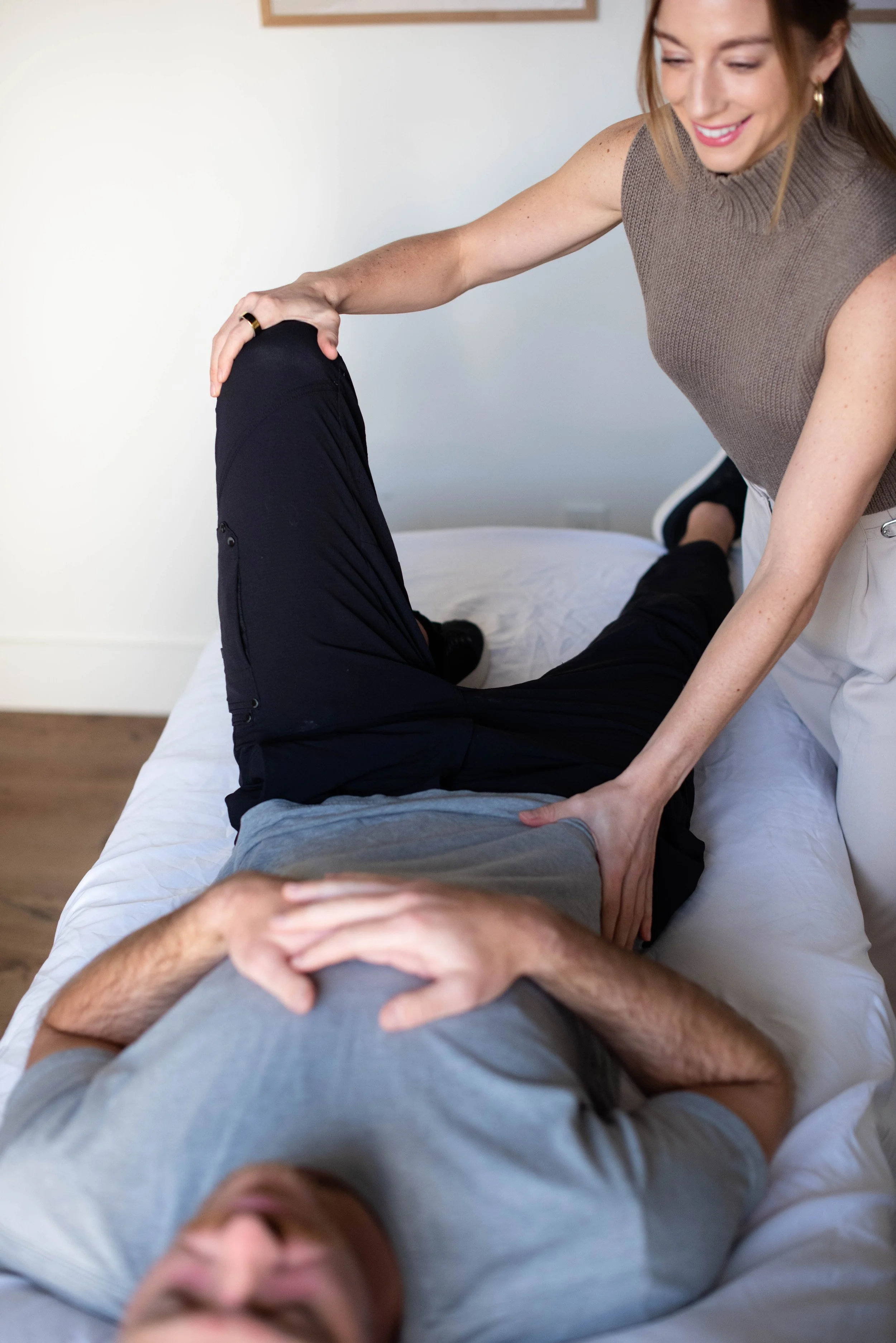
Male pelvic health is often overlooked in both clinical conversations and general education. Many men are unaware that they even have a pelvic floor, let alone that it plays a central role in urinary, bowel, sexual, and musculoskeletal function.
As a result, symptoms are frequently misunderstood, misattributed, or treated in isolation.
This article aims to bridge that gap for you, providing a clear, clinically grounded understanding of male pelvic floor anatomy, function, common symptoms, and how pelvic floor therapy fits into care.
Yes—Men Have Pelvic Floors Too
The pelvic floor is a complex, integrated system of muscles, fascia, ligaments, and nerves that form a supportive base at the bottom of the pelvis.
In men, this system supports:
The bladder
The prostate
The rectum
The penis and urethra
It also plays a critical role in:
Urinary and bowel control
Sexual function
Pressure management within the abdomen
Lumbopelvic and hip stability
Pelvic organ support
Rather than functioning in isolation, the pelvic floor works in coordination with the diaphragm, abdominal wall, spinal stabilizers, and hips, forming a key component of the body’s deep core system.
Pelvic Floor Anatomy: A Systems Perspective
To understand what you may be feeling in your pelvic region, we have to understand it’s structure.
Muscular Components
The primary muscles of the male pelvic floor include:
Levator ani group (pubococcygeus, puborectalis, iliococcygeus) and Obturator Internus → these muscle are internal of the pelvic bowl and we cannot see them
Urogenital diaphragm and Superficial perineal muscles (bulbocavernosus, ischiocavernosus) → these muscles make up and support the external genitalia
These muscles form a dynamic sling that:
Supports pelvic organs
Maintains continence control
Contributes to erectile and ejaculatory function
Connective Tissue & Structural Support
The pelvic floor is reinforced by:
Periprostatic fascia
Urogenital fascia
Scarpa’s fascia
Ligaments such as the sacrotuberous, sacrospinous, and inguinal ligaments
These structures connect the pelvic floor to the:
Low back
Hips
Abdominal wall
Clinical Pearl: This means that restrictions or dysfunction in one region of the body can influence another part of the body contributing to both local and referred symptoms. For example, a hip labral tear can reproduce and contribute to pelvic pain and pelvic floor muscle dysfunction.
Nervous System Integration
The pelvic floor is closely linked to the autonomic nervous system.
Increased sympathetic activity (stress, anxiety, threat perception) can lead to increased resting muscle tone → think “tight pelvic floor” or the inability to actively relax the pelvic floor
Over time, this contributes to a pain–tension–sensitization cycle (link to other article)
What Does the Pelvic Floor Do?
Clinically, the pelvic floor has four primary roles:
1. Support: Maintains positioning and function of pelvic organs (bladder, prostate, testicles, rectum, lower intestines)
2. Sphincteric Control: Regulates urination and bowel movements
3. Sexual Function:
Contributes to:
Erectile rigidity
Ejaculatory control
Blood flow dynamics
4. Stability & Pressure Management
Coordinates with breathing and core musculature to:
Manage intra-abdominal pressure
Support the spine during movement and load
Common Symptoms of Pelvic Floor Dysfunction in Men
Pelvic floor dysfunction is often multifactorial and does not always present in an obvious way.
Urinary Symptoms
Urgency or frequency
Hesitancy or difficulty initiating stream
Burning without infection
Incomplete emptying
Post-void dribble
Bowel Symptoms
Constipation
Straining
Incomplete evacuation
Pain with bowel movements
Fissures and hemorroids
Sexual Symptoms
Erectile dysfunction
Pain with ejaculation
Decreased sensation
Hard flaccid syndrome
Pain Presentations
Perineal, testicular, or penile pain
Suprapubic discomfort
Low back, SI joint, hip, or groin pain
Pain with sitting
Tailbone pain
These symptoms often fluctuate with posture, activity, stress, or bowel/bladder habits, which is a key clinical indicator of pelvic floor involvement
Common Misconceptions About Male Pelvic Health
“Pelvic floor therapy is only for women.”
False. The male pelvic floor is anatomically and functionally complex—and just as clinically relevant.
“These symptoms are always coming from the prostate.”
Not always.
Emerging clinical perspectives show that many pelvic symptoms may be driven by:
Pelvic floor hypertonicity
Neuromuscular dysfunction
Nervous system sensitization
Rather than a primary organ pathology.
“If testing is normal, nothing is wrong.”
Normal imaging or lab results do not rule out musculoskeletal or neuromuscular dysfunction, which are common drivers of symptoms.
“Kegels will fix the problem.”
Not necessarily.
Many men present with overactive or high-tone pelvic floor muscles, where active isolate contractions alone may worsen symptoms. Proper assessment is essential.
When Might Someone Benefit from Pelvic Floor Therapy?
Men may benefit from pelvic floor PT if they experience:
Persistent pelvic pain (>3 months)
Symptoms that worsen with sitting, stress, or activity
Urinary urgency or discomfort without infection
Pain with ejaculation
Associated hip, low back, or abdominal tension
These patterns often suggest a musculoskeletal and neuromuscular component, rather than an isolated urologic issue
What Does Pelvic Floor Therapy Involve?
Pelvic floor therapy is a comprehensive, systems-based approach, not just exercise prescription.
Assessment May Include:
Movement and posture analysis
Breathing mechanics
Internal and external pelvic floor muscle assessment
Evaluation of surrounding regions (hips, abdomen, spine)
Nervous system and symptom pattern screening
Treatment May Include:
Manual Therapy
Myofascial release
Connective tissue mobilization
Techniques to reduce muscle overactivity and improve mobility
Neuromuscular Re-education
Coordination between diaphragm and pelvic floor
Restoring appropriate muscle activation and relaxation
Nervous System Regulation
Pain science education
Down-training strategies
Breathwork
Movement & Functional Retraining
Postural and movement modifications
Gradual return to activity
Behavioral & Lifestyle Strategies
Bladder and bowel habits
Stress and recovery patterns
A multimodal, individualized approach has been shown to improve outcomes, particularly when integrated with medical care
The Takeaway
Male pelvic health is not limited to the prostate, it is a system-wide interaction involving muscles, connective tissue, nerves, and behavior.
When symptoms arise, especially in the absence of clear pathology, the pelvic floor is often a key contributor.
Understanding this allows us to move beyond symptom management and toward restoring function, reducing pain, and improving quality of life.
Medical Disclaimer
This content is intended for educational purposes only and does not constitute medical advice. If you are experiencing symptoms, please consult with a qualified healthcare provider or pelvic floor physical therapist for an individualized evaluation and plan of care.